
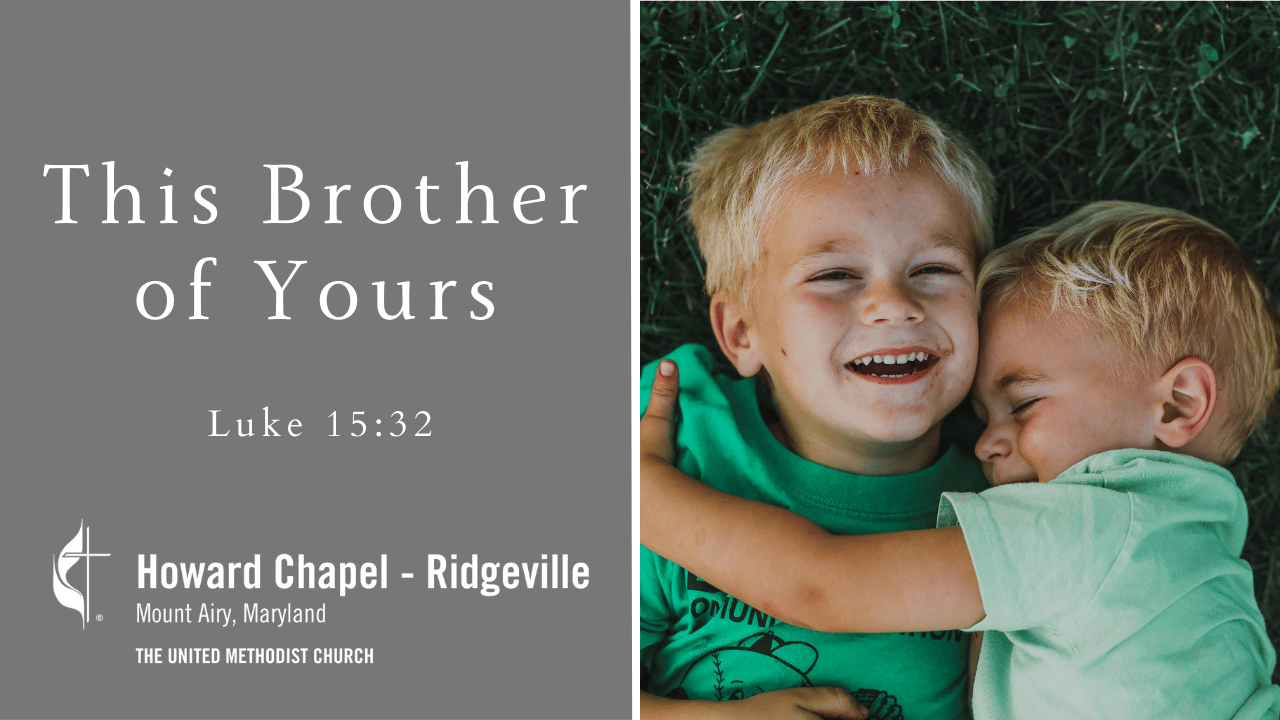
A son, barely older than a child, asks his father to break up his family’s property, to part with the memories and the sweat equity built into the land, to sell it, and then to give him his fair share: one-third of the proceeds, which he takes. And then, he summarily leaves, for another country, never to be heard from again. Why? Ostensibly because he hates his father and his brother and his community, which has raised him.
But he fails out there. His father isn’t with him to give him counsel, or to build connections for him. The son wastes the investment his family and the community have put into him. He is penniless and comes back humbled.
Now, however, the father he forsook is struggling to make a living out of the funds from the sale of his land. Maybe he used what remained to purchase a smaller plot. Maybe he couldn’t find suitable land in his community for sale. Maybe he had to go off in search of a parcel of land somewhere new, and the new community of neighbors didn’t know him, didn’t know his story, didn’t know his son’s faithlessness to his people.
And the loyal son, the older son, who has worked for his father through this ordeal, has seen the younger son’s disregard for his community and family and has watched as the younger son betrayed everyone’s trust and left town, as if that boy were saying to his own father, “I wish you were dead, so I could take what is mine and be done with this family.” The older son is tired of the younger son’s overgrown pride and is glad the younger is no longer around.
Perhaps he thought it was time to bury the wound of betrayal under what ground he had left and try to move on with his life. But you can’t bury a conflict and expect it to stay there.
The younger son returns, and the older son doesn’t receive him back, doesn’t forgive him, doesn’t bother to see in him what is positive, hopeful, helpful, or fruitful. The older son only sees the hurt of having someone betray him and his community’s trust, just wasting everyone’s time, and finally leaving in a huff that embarrasses everyone involved.
But the father, the father who didn’t refuse his son his inheritance, the father who didn’t strike down his son for even asking for it, the father, who was at his door looking for his younger son to return all this time, the father, who was heartbroken and hoping for reconciliation, gazes out on the fields one storied morning and beholds his younger son once more, walking barefoot on the road like a servant – a failure and an embarrassment. The prodigal son’s father saw him and was filled with compassion.
You might have heard the sentiment declared: “Great men never run in public.” But the father runs out to embrace the younger son, the one who would be scorned by anyone else if they saw him. The father clothes him with a robe and sandals and restores him to his status, giving him safety from the vengeful public, who have a stake in keeping their sons from acting up and breaking apart the community, lest those boys think they can return later, having wasted their savings and assets. The father brings the younger son inside, into his home again, and sees in him what we struggle to see in the people who betray us and let us down.
The father sees in the younger son and in the older son, too, that they are both worthy of love, they both belong in the family, they both cannot be cast out. But the older son cannot see that.
And I’m not sure the younger son can see it either. Even after his failure, there is no indication that he is mature, wise, reformed – capable of making good on the trust his father still has in him. The prodigal son is just being practical, coming home, seeking employment, not reconciliation. His outlook is likely still problematic.
And nowhere does it say the sons are reconciled. Nowhere in the whole story do they interact. They are never in the same room. By happenstance or by choice, they are far apart. Maybe you’ve felt estranged from someone who’s known you since you were little. Maybe you know that ache of a broken relationship. How do we repair our communities and our hearts?
The father points the way, humiliating himself by running with a robe to embrace his ungrateful son, and then scandalously leaving the host’s seat at the banquet table to plead in the fields with his older, and bitter, son. He faces down humiliation at every turn in order to be with his beloved, because he understands the value of living life together, the value of believing in each other, the value of relationships, no matter the cost to one’s dignity.
What can you and I learn from the father on a day like today? Do we struggle to embrace in our hearts those who are in our orbit but not in our inner circles? And how often do we prefer to say of them, “this son of yours,” or “that man who thinks he knows what he’s doing,” or “that woman who just left is just too sensitive; good riddance!” How quick are we to cut ties and burn bridges, rather than build roads of communication and acceptance, highways of reconciliation and forgiveness?
In this season of introspection, confession, repentance, and transformation, how are we exhibiting in our actions today that we are closer than we were yesterday, in loving as God loves? Do we recognize our connection to those around us, and do we welcome back those who have done us wrong? What can we learn from the parable of the prodigal son for our own complicated family lives?
And do we want to learn, in this season of Lent? I pray we do. And I pray we will. Amen.

Leave a Reply