
Some days are easier than others. Some days you think everything is going your way: the weather is beautiful, you just heard good news from a friend, and you are filled with joy and optimism. You accomplish everything you set out to and even find time for a hobby or unplanned phone call to a loved one.
Some days are harder than others. Some days you wonder how you can go on, how you’ll make it through the week, how you’ll shrug off a sense of gloom or doom or your own self-doubt. You can’t seem to get anything off the ground, and you’re merely shuttling from one chair to sit and worry about your problems to another chair to sit and worry about your problems while you eat.
Some days are harder still. You visit the hospital and learn of something terrible that’s happened, and your world is turned upside down as you’re taken back into the units, each one progressing in intensity in its interventions and treatments. How did this happen? How did everything get this way? Will I make it out of this somehow? Will I get to experience those easier days again?
When we’re thrown into the hard days, we suddenly realize each moment matters. An hour spent with someone so new to the world is precious, just as precious as an hour spent with a loved one preparing to say goodbye for the last time. These hours at the bookends of our life are ones we remember vividly. With a newborn, we anticipate these holy times and marvel at the continuity between a man’s beginning and that of his own son’s. Or perhaps we visit a family member in hospice and resolve to be just as grateful and joyful as they are when we find ourselves saying our own goodbye one day.
These hours we spend, at our beginning and at our ending, are to be treasured; it’s clear. What we need to learn is that the hours in between are just as precious, too, despite our routine disregard for the mundane, the usual, the everyday. Because we do not see it as sacred, we do not name it as a gift from God. Because each day is like every other day, we allow it to blur past us as we sit in subdued distraction. It is not our habit to spend every minute in reverent awe of the moment; we are lucky to get a few minutes each day that we truly savor, and the span between those moments is glossed over in distraction.
And that’s a shame. As Christians, believe in God’s work of resurrection, that God raises to life what we despair of. But we don’t behave as if that were true in our lives. Instead of seeking how we can better follow God’s commands, we look for ways just to get through each day. Instead of caring for the orphan, the widow, and the stranger in our midst (instead of finding new ways to give of ourselves to God’s children), we look for the next fix we can get our hands on, the next hit to soothe our addiction.
Addiction? What are we addicted to? Some of us are addicted to screens and entertainment, which distract us from our lives, our hardest days. Others drown themselves in food and drink. I don’t list these addictions in judgement. We just need to identify what problems people face if we hope that to make today better than yesterday.
Each of us can name some vice we have entertained in order to avoid the emotions and scars in our hearts or the realities and struggles in our world – whether it be staring vacantly at television and computer screens, overindulging in alcohol, or burying every spiritual hunger under an outsize pile of food.
Sometimes it is the acquisition and accumulation of wealth that captures our attention. The plan usually is to make use of something to soothe us when we don’t know how otherwise to find peace or serenity in our hearts. We even pray to God to give us the desires of our hearts – not peace or consolation, but the things we want, so that we might finally give ourselves gratification and satisfaction.
What is difficult is to place our trust in God enough to offer our hearts to the One who made us. We want God to give us power, power to be in charge of our own comforts, power to insulate ourselves from the terrors we see in the world. But God is too much for us to control, too much for us even to name. And we are children of God, after all. It is God’s image that we bear, not the other way around.
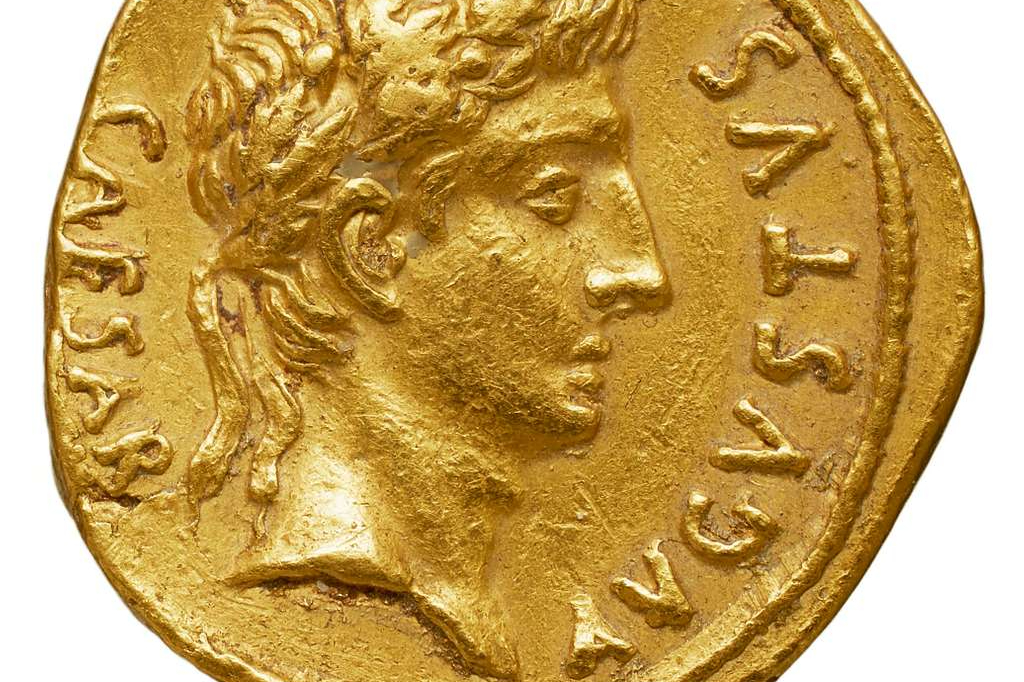
That’s what Christ teaches in the Temple (Matthew 22:15-22). Give up chasing after money and control. Give up food, drink, and distraction. Give to Caesar what is Caesar’s – the coins that bear his image, which so many of us covet. Because that is a relatively small thing to give when you commit to give to God what bears God’s image. Give “to God the things that are God’s” (v. 21).
You are God’s child. You bear God’s image. You matter. You are of value to God. You mean something to God, just as you are. And when you devote yourself to God, to God’s ways and commandments, to God’s will, then that truly is an offering of love. Because you’re no longer praying for God to give you the desires of your heart. You are placing your trust in the One who made each one of us.
To say “thy will be done,” in the Lord’s Prayer each week, to say, as Christ says in the Garden of Gethsemane, “yet not what I want but what you want” (26:39), is to open oneself to the possibility that the world’s ways are not God’s ways, and perhaps we are ready to make today better than yesterday.
Because yesterday, people all over the world ignored Jesus’ teachings, even the ones written down and printed in red ink in some Bibles, effectively dismissing them as suggestions. People seriously questioned them rather than faithfully attempted them. Jesus said, “Love your neighbor.” And we protested, “Well, not all our neighbors!”
After all, it feels like we are having a hard time as a world loving our neighbors – all of them. You hear about development after development in the unfolding of wars and in the destruction of our world. Sometimes I feel like every Sunday follows some mass shooting, or a questionable use of force, or an act of terror and violence. Guns, improvised and homemade weapons, hatred, and prejudice have colored our days more than they should.
And I wonder what God’s plan is to right the world’s evils. What leader or prince, as the Psalmist writes, should we place our trust in? What program or policy should we embrace to make everything right? What ministry should the Church champion to bring justice to the oppressed and to protect the so-called strangers, orphans, and widows of our day?
I want an answer. I would love to have an answer. But I don’t think a piecemeal patchwork of specific programs tailored to particular needs is the solution we are called to work toward. I think God directs us to care for the needs of the powerless in their entirety, without letting a single person slip through the cracks of our institutions.
And for that kind of mission, sufficient guidance and help can only come from God. It requires our adherence and faith every day, rather than hearing the plan at the outset and charting our own way to the destination. We make today better than yesterday by giving to God the things that belong to God, at every moment, and in every place.
What would it take to hang off of every word that comes from God? What would it take to be a true disciple of Jesus Christ, a follower of his ways, even to the detriment of our own self-direction? What would it take to live the kind of life we want to live deep-down, so that our last hours are filled with peace and gratitude rather than shame or uncertainty? It sounds like a big undertaking, and a lot of us already have full schedules and diminished sleep. Or is that just me?
Perhaps we could start by spending one hour a week actively living, rather than allowing ourselves to drift into the habit of numbing ourselves to our own lives. Each of us can name some vice we have entertained in order to avoid the emotions and scars in our hearts or the realities and struggles in our world, whether it be staring vacantly at television and computer screens, overindulging in alcohol, burying every spiritual hunger under an outsize pile of food, or counting our coins, to make sure they are all still held in our name. But what if, for one hour, we reclaimed our lives from those waste pits and committed ourselves to living? What would be your first step?
I would like to provide you with some practical suggestions. If you, like me, are one of those people who spends too much time looking at screens, maybe you could spend 30 minutes to an hour going for a walk. The Rock Creek Park is just two blocks from my house, and with the crisp air and changing leaves, it’s refreshing to walk in the woods and remember for a second what it feels like with no one else around.
Or, maybe you could consider spending a season without eating meat or ice cream, or at least you could spend a week that way. Understand that these are just suggestions for first steps you can take. You can take more steps later on.
Because I hope it doesn’t feel like I’m suggesting you add one more responsibility to your life. That’s not my intent. What I hope is to replace an hour of lost time with something that can be much more valuable and fulfilling.
I encourage you to consider reducing whatever reliance on coping mechanisms and self-medication you may have. I invite you to commit your time and energy to something wholesome – like exercise, volunteering, a creative hobby, or meditation.
In that way, you truly are rendering unto God what belongs to God.
It is my prayer that each of us would grow in our ability to spend each hour fully, giving thanks to God for the gifts we have received in each moment, and finding new ways to share those gifts with others out of an abundance of love. May God give you grace to see everyday hours as holy and to receive fullness of life from the Lord.
I invite your response. Amen.

Leave a Reply