
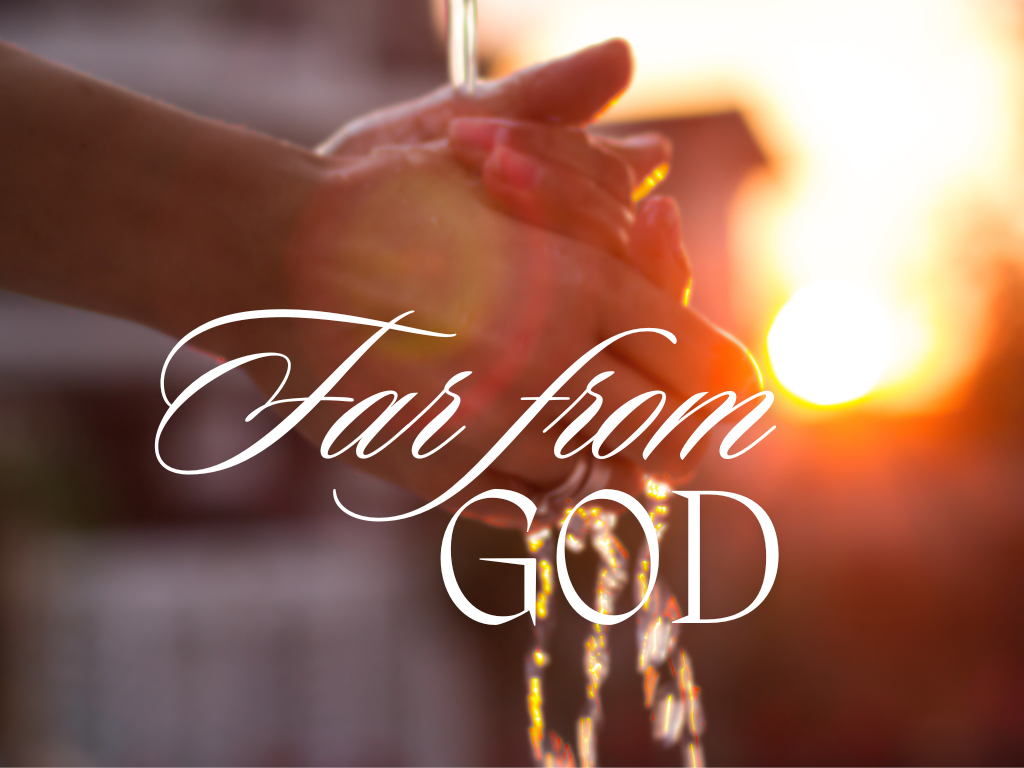
The Pharisees asked Jesus: “Why do your disciples not live according to the tradition of the elders?” They are defiled.
Have you ever thought of someone like that? That they’re defiled? That they’re garbage, trash, worthless, hopeless, not welcome here – to be regarded with suspicion and treated with contempt. Have you ever thought of someone that way? I hope not.
Or maybe someone’s thought that way about you and let you know it. Maybe their assessment of you has stuck with you; you can’t shake it. You’ve lived a full life, and still you think of yourself sometimes as unworthy of acceptance, unworthy of friendship, unworthy of accommodation – of people being glad to go out of their way to make room for you to join then.
It’s a terrible way to think about people, that if they don’t conform to the norms of your nation, if they aren’t properly patriotic, if they don’t represent the culture of your people adequately enough in the eyes of the people who matter.
If they just don’t fit in, then they’re defiled and unclean, unpermitted to enter the Temple or the synagogue, denied access to participation in public life, and restricted from going near anyone who wants to be admitted, lest they, too, become defiled by association.
A spiritual contagion of uncleanliness is, socially, dreadful to contemplate. You make one choice about a person you want to spend time with, and suddenly you’re on the fringes, you’re no longer on speaking terms with everyone you used to know.
Calling the disciples defiled is as if they were gentiles and ate pork, or as if they had visible signs of leprosy, or as if they were suspected to have AIDS before people understood anything about it, or as if they were in a class of untouchables.
Have you ever felt about people that way, that they were untouchable? Or have you ever worried that you’d never be able to shake being seen that way by others – that you were defiled?
It isn’t how others view you that determines if your heart is pure. The perception people have of you doesn’t matter as much as your own state of health. People can comment on how healthy you look, but it doesn’t matter if you aren’t seeing a doctor. My grandfather, who in the summers rode his bicycle around his village on errands, and who in the winter skied the Alps, was never thought of as unfit or unhealthy.
But when he was playing golf the first year he retired from his work, it was a shock and surprise to everyone who knew him, that he suffered from and died from a sudden heart attack. His lifestyle was active, but his cholesterol level was too high. People can comment on how healthy you look, but it doesn’t matter if you aren’t seeing a doctor.
Or take me, for example. I am embarrassed to tell this story. During the pandemic, in the spring of 2020, my dentist office called me and asked if I felt comfortable coming in for my regular cleaning. I looked at the news, how staggering the statistics were, and I looked at my family: We were expecting a baby, who would soon be named Arthur, very soon. I didn’t go to the dentist.
As the months drew on, as we waited for a vaccine, as we waited for a pediatric vaccine, as we waited for an infants vaccine, I fell out of the habit. I brushed my teeth, I tried to floss, but I didn’t go to the dentist again, until this past week. She told me I have three small cavities; she explained the importance of my gums; she noted the alignment of my teeth; and she scheduled my next appointments to get me back on track.
It’s too easy to focus on how we’re perceived externally, how others view us, and to ignore our own health, the blood tests to indicate how our organs are performing, which hint at what changes we should make to feel more vital, to do the things we love. Likewise, it’s too easy to fixate on the immediate concerns of the moment or to obsess over what the people around us think about us today, to make sure we have secured to ourselves a mask of sanity, and to discard the importance of taking an hour to help a neighbor, no matter how much or how little they are talked about.
To help another person is to possess the antidote to the things we find deplorable. Jesus lists them as “immorality, theft, murder, adultery, avarice, wickedness, deceit, debauchery, envy, slander, pride, folly.” The antidote is humility, a sense of commonality with one’s neighbor, an emotional understanding of the need we all have for compassion and help. Not one of us earned the success we enjoy all on our own; all of us are the product of our communities, for better or for worse.
Humility keeps us from thievery, murder, adultery, greed, cruelty, deception, debauchery, envy, slander, pride, and foolhardiness. Humility keeps us grounded. We are not as brilliant, or beautiful, or pure, or deserving, as our self-aggrandizing egos would have us believe. Humility anchors us from assuming we are in the right always, and that we are justified in generally not caring about other people’s welfare.
And humility is so hard to cultivate. It requires a sober look at ourselves, an examination, a brave and unflinching assessment of what we have done, what we have left undone, who we have loved, who we have failed to love. It is helpful to go through our days with prayer, and to share our observations periodically with someone we trust or look up to, someone who knows us and will tell us the truth, rather than just agree with us. Having humility takes a commitment.
There were surely plenty who smiled at what Jesus said and then went back to their typical patterns of meeting and greeting the familiar folk who were just like them. And they hardly had to notice the untouchables, the unclean, the defiled. Because they still had no intention of being seen as unclean themselves; they lived a separate existence, separate and unequal, as difference classes of people, almost side by side but never hand in hand.
Somehow there were a few, and you of course know there are always a few, who took to heart what the Savior had said, who considered the people in front of them first as people, not as unclean liabilities, not as undesirable intruders upon polite society, not as shameful relatives to try to hide away or silence from speaking at family gatherings.
Somehow, there were a few people who saw others as they were – simply made in the image of God, of bearing sacred worth. Because of these true disciples, these outcast people were welcomed, accepted, included, known, healed, and loved. And together they set foot down a new path, following after the Son of God, who preached to all who might hear, that the Kingdom of Heaven has come near.
What path will you walk down, this day and the next? I invite your response. Amen.

Leave a Reply